


As my dear teacher Bob Haddad says, Thai Massage, or Nuad Phaen Boran, as it is known in the Thai language, is not the ‘massage’ that we know in Western culture. Instead, it is better to call it a ‘ritual’. Let’s start with this: what I share here is not about the massage you might be familiar with; where tables and oils are used or the goal is to work on muscles or tissues to encourage physical relaxation. Nuad Boran is a combination of physical, energetic and spiritual techniques and maybe that’s why it is not super popular, because it encourages the receiver to take part in their own healing too.
I am not sure how many of the massages out there have a history as old and interesting as Nuad Phaen Boran. Even though it is not clear exactly how and when it developed in Thailand, its origins are traced back to India, around 1000 BCE. Jivaka Kumarabhaccha, a legendary doctor during the time of Buddha, is accepted as the main figure in the development of Thai Massage. As Buddhism spread from India to Southeast Asia, it brought with it Indian medical practices, including Ayurvedic and yogic healing methods. That’s how Thai massage began to merge with local healing traditions and religious practices, influenced by Buddhist principles of mindfulness and meditation.
You may also hear the name Thai ‘Yoga’ Massage, which is technically the same, but the word yoga is added, because the poses you receive during the massage look like yoga poses. You can also hear the name Lazy Yoga, as it feels like you are doing yoga without any effort. I personally found Thai Massage when I was looking for something to help with my yoga teaching. After my first (200 hours) yoga teacher training, I was very hesitant to touch and assist the students in the classes, because I was aware that there is so much more in a human body to consider, before touching it, not just physical aspects. I was not wrong, as Thai Massage is exactly this; to read and understand the energies of the body. Now, I like to call it Thai Yoga, not because of the similarity of the poses, but because two other essential things in yoga are also present in Thai Massage: energy and meditation.
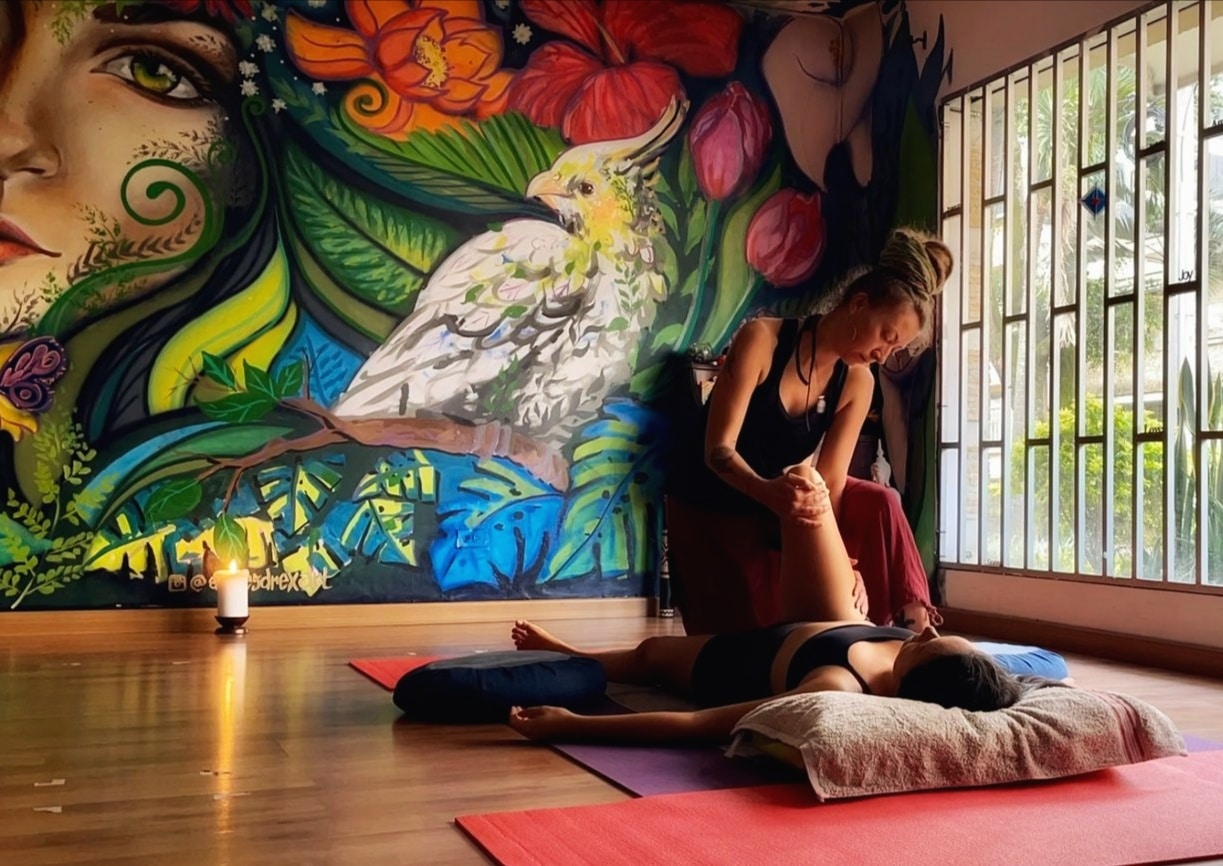
From the Eastern culture’s perspective, the human body is not just bones and muscles and tissues. It also contains an invisible energy force. The sequences used in the Thai Massage follow the energy lines of the body. In yoga, these lines are called Nadi, in Thai Massage, they are called Sen lines. It is believed that we have 72.000 energy lines in the body, and 10 of them are the main ones that are followed in Thai Massage. So when we give massage to someone, rather than just thinking of which muscle needs what, we follow these lines to open up the channels of the body, so they can have a holistic treatment.
An experienced Thai Massage practitioner can feel in which part of the body the energy is blocked and can focus more on those parts during the session, so that the healing happens in the entire being of the receiver, not just on the physical level. Thai Massage is simply an energy exchange in between the giver and the receiver. Between me and you. That’s why as therapists we practice metta (loving-kindness and compassion toward others, in Pali language) all throughout the session. With metta and breath awareness, the massage becomes meditation in movement. Every therapist needs to be aware of their own and the receiver’s breath at all times, to decide when to apply pressure and to keep their awareness in the present moment This turns the session into a meditation.
The last things that I want to mention, which makes Nuad Phaen Boran so special are: trust and letting go. The person who receives the massage needs to practice letting go of control and trust, while their body is moved by the therapist, instead of trying to hold on. This might not be very easy, but once learned, might be very rewarding. Not just during the massage but in life too! And at the end, all of these turn Thai Massage into a ritual and a sacred dance between the receiver and the giver. The therapist can create a safe and secure environment by using these elements, so that the healing can happen in the different layers of the person, not just in the physical body.
Derya Deniz
About the Author: Derya is a yoga teacher, massage therapist and plant medicine facilitator & student. She received her Thai massage training in Thailand and Turkey and has been practicing since 2016. She spent 3 years teaching yoga and sharing the art of Thai massage between Cambodia, Indonesia, Nepal, Sri Lanka and Malaysia.
Since 2021, she has been living between Peru and Colombia, mainly working with the plant medicine Ayahuasca. Since she experienced a deep connection with her feminine lineage with Ayahuasca and witnessed the difficulties women face in psychedelic spaces, she devoted more time and energy to the topic of women’s safety. In the past few years she has been actively helping women to prepare for and integrate their plant medicine experiences.
This year next up for Derya is her yoga teacher training event in Cambodia in August. If you want to be in touch you can find her on Instagram as @danceofderya.